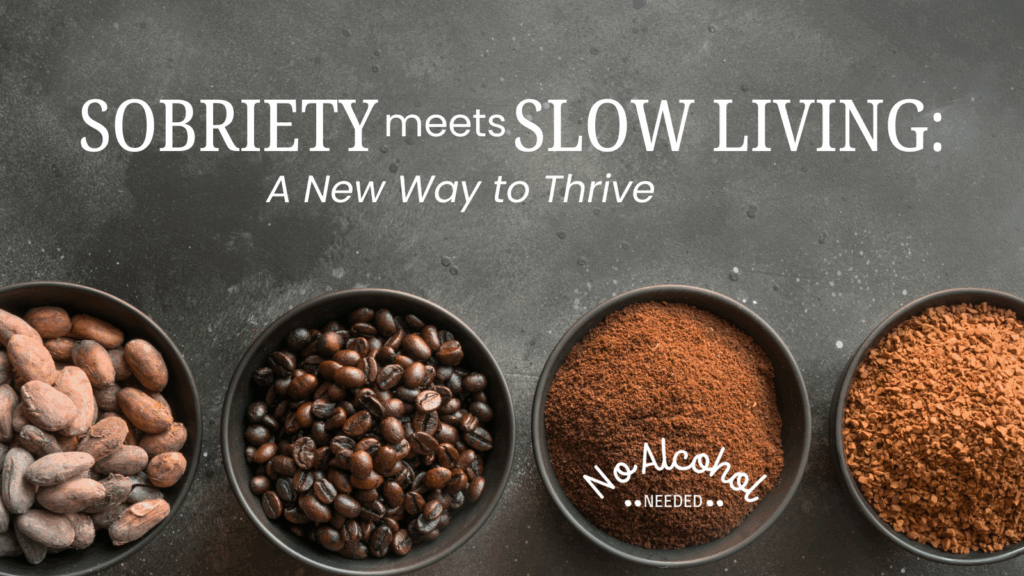
I started grinding coffee beans in an old fashioned hand grinder every night.
I fill up the grinder and start slowly turning the crank, watching the beans disappear one by one into the canister below. I wake up to the scent of freshly made coffee that I sip slowly, luxuriating in the moment.
To be honest, I’m not even sure it tastes better than regular coffee. But the ritual of it is so soothing and satisfying that it’s become a regular part of my routine. There’s something about the pause that the process requires that creates a sensation of peace and intention that washes over me. That sensation is the one I chase these days.
A far cry from the sensation of a fuzzy head and numbed emotions that I wasted ten years of my life chasing before I realized this is what I was really after.
I started practicing slow living long before I knew there was a term for it.
For so many years, I ran myself into the ground, trying to prove my worth with productivity.
I hit the ground running for years – with a pounding head and a heart full of regret most mornings – and started in on the never-ending to-do list. Cooking, cleaning, driving kids around. Math lessons, craft projects, volunteer work. Milking goats, baking bread, posting pictures of it all on Facebook. I crammed as much into a day as I possibly could and never really took the time to enjoy it.
I just wanted to get more done. Looking back, I realize I pushed so hard to do more so I could (hopefully) feel better about myself.
When I quit drinking, I realized I needed to slow down.
Rest wasn’t really a word in my vocabulary.
I didn’t feel like I deserved it. I carried this nagging sense of inadequacy – like I could never quite be enough. So as soon as I finished one task, I plowed forward into the next one. By the time the kids were in bed, I downed a few glasses of wine to “relax” before passing out from the alcohol mixed with the exhaustion.
From the outside, it looked like I had it all together… but I was living a life I wasn’t even present for.
When I stopped drinking, one of the first things I realized was that I wasn’t going to be able to keep the same pace I’d kept up for all those years. I couldn’t live in that state of permanent exhaustion and pressure. I couldn’t keep trying to prove that I was worthy of the life I had. The hustling left me craving a drink night after night. I wasn’t going to be able to fight those cravings forever.
Something had to change. I realized I had to slow down.
What is ‘Slow Living’?
The term “slow living” is defined as “a mindset whereby you curate a more meaningful and conscious lifestyle that’s in line with what you value most in life. It means doing everything at the right speed. Instead of striving to do things faster, the slow movement focuses on doing things better.” (slowlivingldn.com)
It’s about choosing how you spend your time and energy with intention, not just for the sake of getting more accomplished or making things look better on the outside.
These days, slow living is a lifestyle being adopted all over the world – not just for people in recovery, but for people who want to live a life that feels purpose-filled and aligned with what they truly value. It’s a lifestyle of slow, conscious luxury – and it’s perfect for people who have removed alcohol from their lives and are trying to create a life that feels full and meaningful.
For many of us, our lives have revolved around more. More tasks checked off the to-do list; more money to spend on more stuff; homes that look more like Pinterest; more friends to fend off the loneliness. Every hour of every day was focused on bigger, better, more, most.
Slow living is the opposite.
It’s quality over quantity.
Quality relationships; quality experiences; quality rituals.
Slow Living Rituals Support Your Sober Life
Before I knew that slow living was a thing, I called these little rituals “savoring”.
That time spent grinding my coffee, inhaling the scent as I sipped it the next morning – I was savoring the process, from start to finish. A beautiful melding of mindfulness and gratitude.
For so many years, alcohol was a ritual. The act of opening the bottle of wine, pouring it into my favorite glass, sipping while I fixed dinner. Later, pouring another glass (and another, and another) was this ritual that brought a sense of peace and soothing. When you take alcohol out of the picture, you’re left with a void – an empty space, where your soothing ritual used to be.
Creating new, intentional rituals fills that space and creates a sense of fulfillment. Humans thrive on rituals and order.
And it’s not just about the sense of familiarity. Slow living is scientifically proven to benefit many aspects of our wellbeing:
- Reduces cortisol
- Taps into parasympathetic nervous system
- Lowers blood pressure
- Slows the nervous system
- Reduces
- Regulates emotions
- Improves mental health
- Improves physical health
Source: Psychology Today
For so many of us, we existed in an almost permanent state of fight-or-flight. Between the alcohol coursing through our veins and our brain trying to regulate it, relaxing was nearly impossible.
Slow living provides a type of calm and peace that I used to only dream of. The kind that I was always trying to get from alcohol that it could never deliver.
Shifting Away From Instant Gratification
Alcohol always pushed us to get instant, low quality results – and to settle for that.
One of the hardest lessons to learn in sobriety – and one that slow living inherently teaches – is the skill of embracing delayed gratification.
It’s cooking from scratch for a meal that’s infinitely more satisfying. It’s feeling and journaling through emotions to encourage real healing, instead of instantly numbing them with a drink. It’s knitting a sweater feeling a little bit giddy when you pull it over your head, instead of throwing on a $20 sweater you bought on a whim at Target last week. It’s making time for a leisurely cup of coffee and meaningful conversation with a friend instead of scrolling Facebook and trying to feel connected.
The things that take longer also bring a greater sense of satisfaction and purpose – but it takes practice to believe that it’s worth it.
Slowing down in this way also creates a sense that time lasts longer. When you take the rushing out of every moment and slow down to savor it, it feels like time moves more slowly. One regret my clients voice often is that they feel like they wasted so much time when they were drinking. This is a beautiful, intentional way to honor that regret and learn from it.
How to Incorporate Slow Living Into Your Sober Life
It’s not about all or nothing.
This isn’t a full lifestyle overhaul. It’s about intentionally adding a few things into your life that bring fulfillment, and slowing your pace enough to truly enjoy them.
Wondering what that might look like? Here are some ideas to get you started:
- Creating a ritual to savor a cup of coffee, a cup of tea, or a special mocktail
- Go for a walk, not to burn calories, but to notice as many details as you can
- Cook Sunday dinner completely from scratch, without rushing – and take time to savor the food you’ve prepared
- Plant a small garden and tend to it, mindfully, each day
- Set aside time for creativity or a slow craft – painting, knitting, art journaling
- Uplug for a hour each day, and choose a way to spend that time that feels fulfilling
- Take a slow shower instead of rushing through it so you can move on with your to-do list
- Slow down a regular household chore, and focus on doing it mindfully and with gratitude
- Do one thing at a time: eat dinner without scrolling your phone; read a book without the TV on.
- Say no to things that don’t align with your values or don’t feel like a good use of your time and energy
- Focus on the task at hand instead of thinking ahead to what needs to be done next
There should be time set aside every day to bring some slow living in. Look at your to-do list today. Is there anything you can do with more intentionality? Can you add something to the list that will bring you some peace and calm? Write it in, and make sure you prioritize it.
Creating a full life isn’t about being busier and getting more done. It’s about removing the things that don’t align with your values, and bringing in more of the things that do.
These days, more looks different. It’s about doing more of the things that matter, creating more peace, more joy, and more fulfillment.
When you practice slow living, it’s no longer about escaping life. It’s about finally being in it.
If you want to learn more about who you are and what your values are, make sure you download my free e-book. It’s filled with journaling questions and exercises to help you uncover your true self – so you can start living accordingly.
For Further Reading
How to Stay Sober Long Term: Lessons From My Relapse and Recovery
2 Ways to Practice Mindfulness if You Suck at Meditating
I Quit Drinking and Quit Social Media For A Year. Here’s What Happened.

Julie Miller, RCP is a certified recovery coach and the founder of Create A Life So Full. After a decade of too much drinking, she found her way into an alcohol free life and is now thriving. Her recovery is founded in overcoming shame, finding her authentic self, and creating a life so full there’s no space left for alcohol. Through her coaching, podcasting, and the recovery community she has built, Julie has found her purpose in helping others find their way out of addiction and into a meaningful, purpose filled life of freedom.